


The pharmaceutical industry has rapidly embraced membrane-based Water for Injection (WFI) production, commonly known as "Cold WFI," as a more efficient alternative to traditional distillation methods. To fully capitalize on this critical clean water utility, pharmaceutical manufacturers must extend optimization beyond the purified water generation unit—such as Veolia's Orion™—to encompass the entire downstream infrastructure, including sanitization protocols and storage and distribution systems.
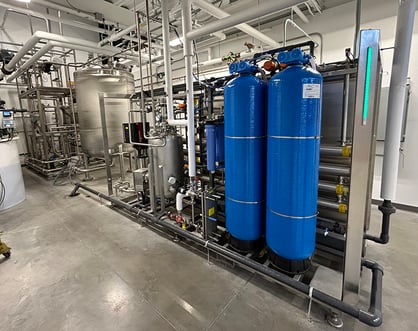 Traditional WFI system sanitization through continuous hot water circulation presents significant challenges: excessive energy consumption, substantial wastewater generation, and elevated capital and maintenance costs make this approach both costly and environmentally unsustainable. Intermittent ozone sanitization offers a compelling alternative that addresses these limitations. By harnessing ozone's potent oxidizing properties, this method delivers rapid and effective microbial control at ambient temperatures, eliminating heat requirements and enabling true end-to-end low-temperature operation. When integrated with real-time analytical monitoring, ozone sanitization provides pharmaceutical manufacturers with a more economical, responsive, and sustainable approach to managing microbial contamination risk in water systems.
This article explores the principles, operational benefits, and best practices for implementing ozone sanitization, as well as the role of advanced instrumentation—such as online Total Organic Carbon (TOC) analyzers, microfluidic Bacterial Endotoxin Testing (BET), and Rapid Microbial Methods (RMMs)—in enhancing pharmaceutical water quality assurance.
Why Ozone Sanitization?
1) Cost and Energy Efficiency
Ozone, generated via an electrolytic cell such as Ozonia Membrel, uses the oxygen portion of a small WFI sidestream to make ozone. Unlike a corona discharge ozone generator, this type of system does not require a separate oxygen source, which can introduce impurities into the high-purity WFI. This offers a significant advantage over traditional hot water sanitization by eliminating the need for energy-intensive heating and cooling cycles. Furthermore, ozone sanitization extends the lifespan of membranes, piping, and valves by reducing thermal stress and rouging potential on system components, and avoiding steam generation, thereby lowering capital and maintenance costs.
2) Reduced Wastewater Volume
Ozone sanitization eliminates the need for post-sanitization rinsing, conserving water and reducing effluent treatment costs. This is because ozone breaks down into oxygen, leaving no harmful byproducts, avoiding the extensive flushing required after hot water sanitization to remove degraded microbial residues. Consequently, minimal wastewater is discharged during the sanitization process.
3) Faster Sanitization Cycles
Ozone is a powerful oxidizing agent that instantly neutralizes biological matter such as bacteria, viruses, and biofilm-forming microorganisms. Unlike hot water, which requires prolonged exposure to achieve sanitization, ozone works within minutes, allowing for shorter downtimes and more frequent sanitization cycles without disrupting production.
About Ozone Sanitization & Implementation
Ozone, generated via an electrolytic cell, is dissolved into the water to achieve a residual ozone concentration of 0.2-0.5 ppm at the storage tank before it is destroyed with ultraviolet radiation. For distribution loops, a weekly ozone sanitization cycle targeting 0.8-1 ppm circulated for 30-60 minutes is sufficient to maintain microbial control. Online ozone sensors monitor concentration in real-time, at the storage tank outlet, post-UV radiation, and at the loop return, allowing precise control and automation of the process.
The Role of Online Monitoring and Modern Analytical Instrumentation
Real-time monitoring and rapid testing methods are the perfect complement to today’s pharmaceutical water systems. Online analytical instruments provide immediate feedback on critical quality attributes, enabling proactive interventions before deviations occur. Similarly, rapid methods and innovative technologies used at-line or in the laboratory are revolutionizing water quality testing by delivering near real-time results and dramatically improving workflow efficiencies. These modern analytical instruments enable faster, more actionable decisions that support comprehensive process analytical technology (PAT) strategies, enhancing microbial control.
1. Total Organic Carbon (TOC) Analyzers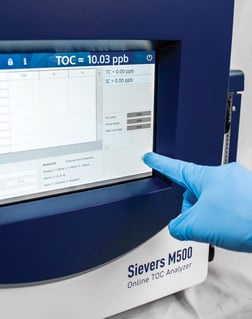 TOC is a key indicator of organic contamination in pharmaceutical water. Unlike online TOC analyzers such as Sievers M500, traditional lab-based TOC testing can take hours, delaying corrective actions. Online TOC analyzers provide:
Online TOC analyzers provide:
Continuous, real-time TOC measurements with results in under 5 minutes.
Immediate alerts if TOC levels approach or exceed the 0.5 ppm limit, allowing operators to investigate and resolve issues promptly.
 2. Bacterial Endotoxin Testing (BET)
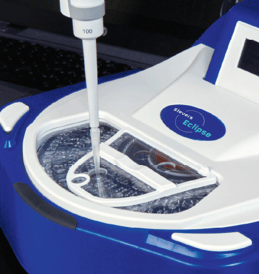
Endotoxins, derived from Gram-negative bacteria, are a major concern in WFI systems. Traditional BET methods, such as the Limulus Amebocyte Lysate (LAL) test, require extensive manual steps performed in centralized labs, often leading to 24–48 hours for results. However, microfluidic BET technologies such as the Sievers Eclipse now offer:
However, rapid BET technologies now offer:
Fast, easy endotoxin testing procedures reduce the risk of contamination.
Streamlined sampling and analysis, minimizing human error and improving data integrity.
3. Rapid Microbial Methods (RMMs)
Flow cytometry-based RMMs revolutionize microbial monitoring by providing real-time detection and enumeration of microorganisms in water samples.
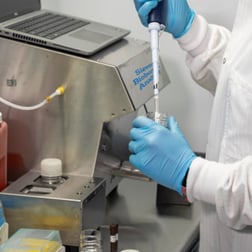 Unlike traditional culture methods, which take 3–5 days, flow cytometry uses fluorescent stains to detect bioburden faster. For instance, Sievers Soleil delivers:
Results in less than 45 minutes, enabling faster decision-making.
Detection of viable but non-culturable bacteria, which are missed by conventional plate count techniques but can still pose contamination risks.
High-throughput analysis, which allows for more frequent and comprehensive monitoring of the water system, is not only faster but also more sensitive, accurate, and reliable.
A Smarter Approach to Pharmaceutical Water Sanitization
 While membrane-based systems traditionally rely on hot water for microbial control and biofilm management, ozone sanitization offers a superior solution for ambient-temperature storage and distribution loops. When combined with advanced online monitoring, rapid testing, and intermittent ozone treatment, it delivers comprehensive microbial control while reducing operational costs through energy and water savings, enhancing sanitization effectiveness, enabling real-time quality assurance, and minimizing environmental impact.
 As the pharmaceutical industry increasingly adopts end-to-end low-temperature systems driven by cost and sustainability concerns, ozone sanitization paired with cutting-edge monitoring technologies provides a secure, efficient, and environmentally responsible path forward for maintaining the highest standards of water purity.